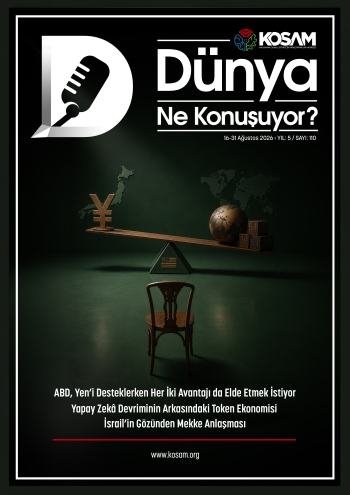




What the World is Talking About
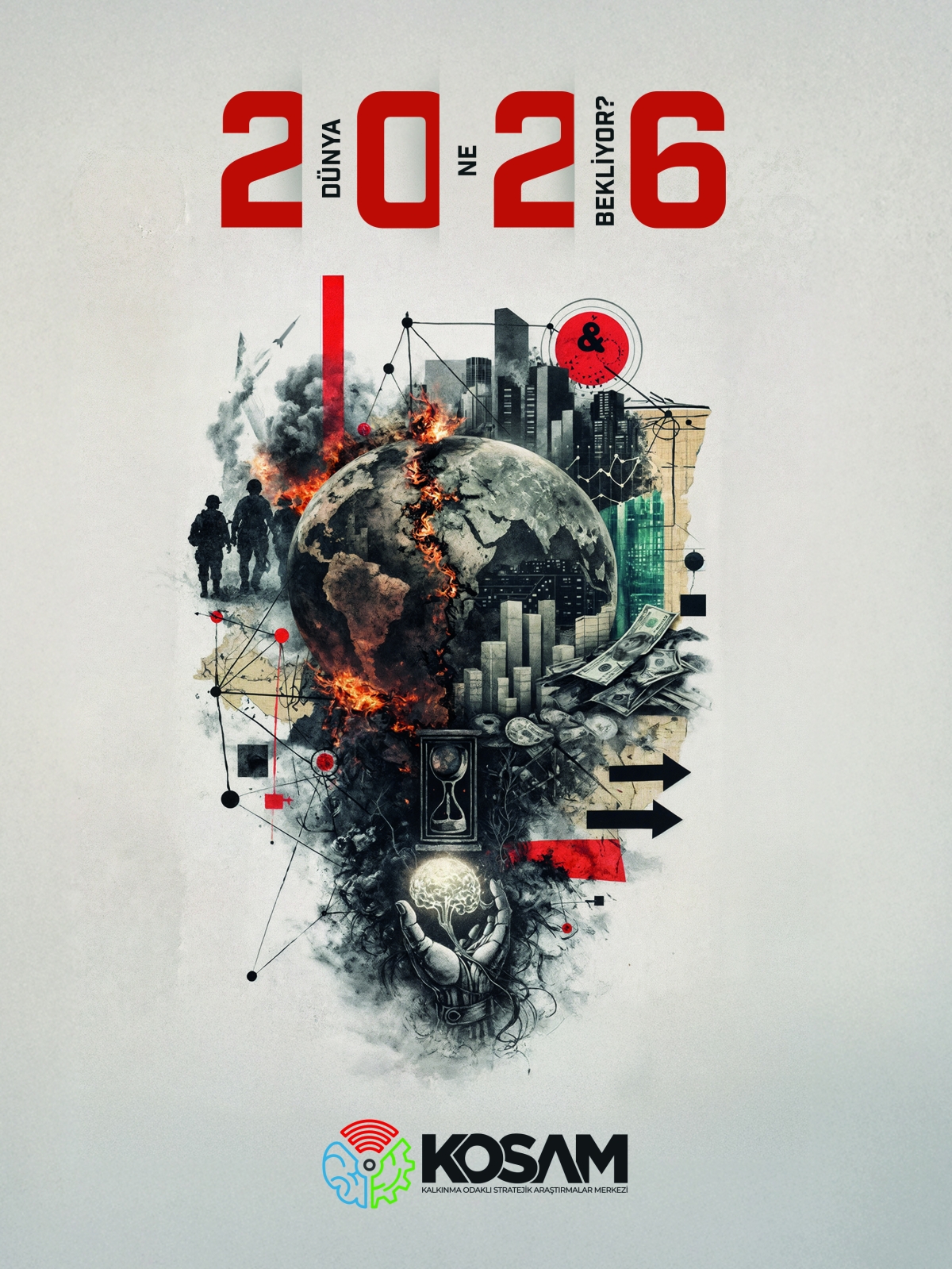
2026 represents a critical transition period in the global system, often described as the “end of the beginning,” in which conditions of “controlled disorder” turns into a more structural configuration. The year marks a phase in which vulnerabilities accumulated over previous years have started to produce tangible outcomes across the economic, political, technological, and energy domains.
The global economy continues to move forward along a moderate and highly fragile equilibrium. In the United States, while the Federal Reserve’s interest rate cuts aim to ease financial conditions, growth dynamics are increasingly shaped by investments in artificial intelligence and household consumption. China maintains its weight in global trade through strong government-backed inducements and strategy centered on high-technology exports. In Europe, particularly under Germany’s leadership, a shift in fiscal policy priorities seeks to inject new momentum into the economy by accelerating investments in defense, infrastructure, and green energy. Nevertheless, the delayed effects of previously imposed tariffs and ongoing trade conflicts continue to exert pressure on global supply chains.
On the political and geopolitical plane, 2026 emerges as a year in which global power balances are being redrawn. The midterm elections in the United States function as a referendum on the current administration, keeping political uncertainty alive amid the possibility of shifting power dynamics in Congress. For Europe which described as facing a “dangerous year”; Russia’s escalating hybrid warfare activities, acts of sabotage, and cyberattacks pose serious challenges to continental security. The war of attrition in Ukraine, fragile ceasefire processes in the Middle East, and rising tensions across the Asia-Pacific corridor stand out in the report as the most sensitive stress points for global peace.
The technology sphere is experiencing a rupture in which artificial intelligence operating through autonomous “agents” has begun to directly manage business processes. While these systems standardize corporate productivity, quantum preparedness and cybersecurity are becoming top priorities on boardroom agendas. Although the gap between expectations and reality in humanoid robotics persists, technologies such as digital twins and extended reality are already generating tangible value within operational models.
The energy transition is evolving into an arena of industrial competition, where countries are racing to dominate clean technology manufacturing. As energy security and resilient move to the center of strategic planning, the circular economy is gaining momentum through AI-enabled systems. Investors, meanwhile, are increasingly pricing physical climate risks as an integral component of financial stability.
While 2026 carries significant risks ranging from geopolitical fragilities to mounting economic pressures, it also brings major opportunities driven by productivity gains from technological revolutions and the search for new markets. In a multipolar world order, the ability to accurately interpret this complex landscape and demonstrate high degree of adaptability is becoming a more critical necessity than ever for both states and business leaders.
 TR
TR EN
EN